

City of Columbus - Water Plants and Wastewater Treatment Plant - Energy Efficiency
The Need
In 2017, Mayor Andrew J. Ginther announced an ambitious goal to combat climate change and reduce greenhouse gas emissions from municipal operations by 40% by the year 2030, to explore a 100% renewable energy portfolio for municipal operations, and to reduce annual energy spending. In 2020, The City of Columbus, along with community stakeholders and the public, created a Columbus Climate Action Plan (CAP) to serve as a roadmap to meet the 2050 carbon neutrality goal.
While renewable energy can be impactful and highly visible, energy efficiency is a critical component to climate action planning. It also doesn’t hurt that efficiency opportunities are everywhere, and the cheapest energy is the energy that does not get consumed! As some of the City’s largest energy using facilities, Columbus’s water plants and wastewater treatment plants are obvious locations to seek energy efficiency opportunities.
Our Approach
Go performed “ASHRAE Level 2” energy audits at two City-owned water plants and one wastewater treatment plant. In such a study, Go analyses major energy using systems to identify opportunities, ranging from low or no cost operational changes up to capital investment projects, that resulted in energy savings, emissions reductions, and cost savings.
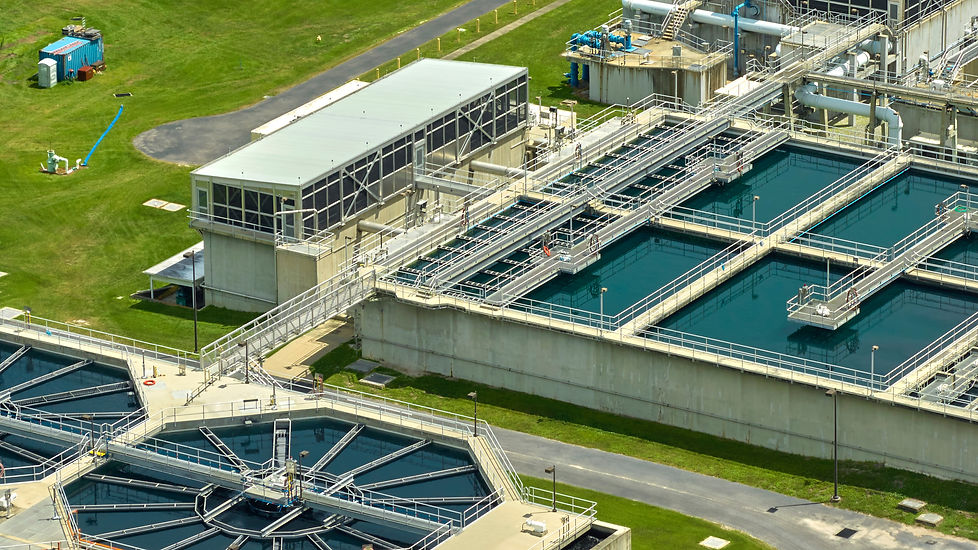
Did you know that pumping systems can use around 80% of the energy at a water plant? We discovered that Columbus’s water plants already operate fairly efficiently due to the good design of their pumping systems. That didn’t mean that pumping energy savings opportunities didn’t exist! We also analyzed supporting systems such as HVAC, lighting, and controls. At the wastewater treatment plant, we focused our analysis on the aeration blowers and other supporting systems.
The Results
We were able to identify opportunities that could yield about a 10% reduction in annual energy consumption at these sites, corresponding to around $775,000 in annual energy cost savings potential and 18 million lbs/CO2e saved annually, potentially helping the City make progress toward their CAP goals.
Our Role
Energy Auditor
The Client
City of Columbus
Duration
2022 - 2025
Team

Logan Smith

Mohamed Tatari, PE